Camira — Sample clarification desk
Sample clarification desk: review the material context and the next decision.
- Brief
- Sample
- Approval
- Order context
Sample clarification desk
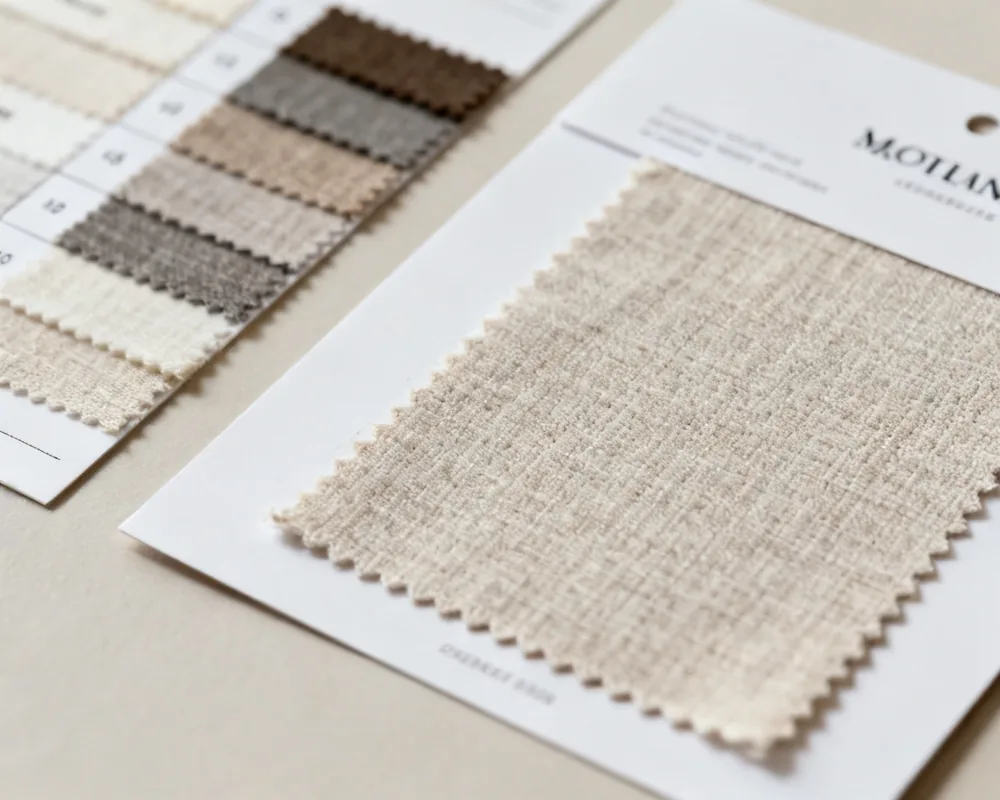
Describe the difference
- What should stay the same?
- Which construction or finishing property needs review?
- How will the next sample be assessed?
When the reference is incomplete
State the missing information rather than assume equivalence.
Compare the next reference under the same conditions as the retained specimen. View both under the intended room lighting, mark orientation and describe the observed shade difference without assuming a screen image is a colour standard. If a lab dip or shade band is proposed, identify its approval role and the production lot to which it applies. Set a dimensional tolerance with the agreed specification rather than importing a generic number. A small sample cannot establish roll-wide uniformity or bulk equivalence.
Keep fiber composition, weave construction, usable width, dimensional stability and batch traceability with the sample record. When information is incomplete, list the missing item and its effect on the decision. An unknown finish may affect care; an undocumented backing may affect joining; a missing specimen state prevents a fair test comparison. Ask for the method, report date and material scope before repeating a numerical result. Certificates need a holder and covered product scope and do not replace performance evidence. Stock and custom requests also require separate confirmation of quantity, shade lot and timing. Use the enquiry to organise these questions; do not treat submission as sample approval, order acceptance or a promised test service.
For contract upholstery, a useful sample conversation starts with a precise difference: the current cloth feels too firm, the shade shifts under room lighting, or the cutting plan loses usable area near the edge. Keep the reference identifiable with a date, face and reverse, colour reference and intended seating application. Record fiber composition, weave construction and GSM where known. These are review inputs rather than a guarantee that another material will behave identically. A swatch enquiry also leaves availability and supply terms to be confirmed.
Separate what must remain from what may change. A designer may prioritise handfeel while an upholsterer needs predictable edge behaviour and a purchaser needs a clear material description. Put these priorities beside usable width in cm, required quantity and destination. A soft surface and a tight seam requirement can lead to different construction choices. Do not use abrasion resistance as a substitute for seam slippage evidence; surface wear and movement of yarns at a seam answer different questions. Pilling and colorfastness also need their own context.
Prepare the next handoff
Share the sample reference and order context.