Specification support
Camira — Put the technical question in context
- Method
- Identify the test or requirement
- Specimen
- Describe the material state
Before you send
Start with the use
Describe the setting in your own words.
Describe the interior setting and the fabric decision in ordinary language. Is the cloth intended for a reception seat, a meeting area or another interior upholstery detail? Identify the contact and care pattern, the desired surface character and any assembly constraint. This helps keep the enquiry about the material rather than a finished furniture order. Do not assume a material seen in a photograph has the same construction as the reference being discussed.
Add the material
A reference or a physical sample can clarify the request.
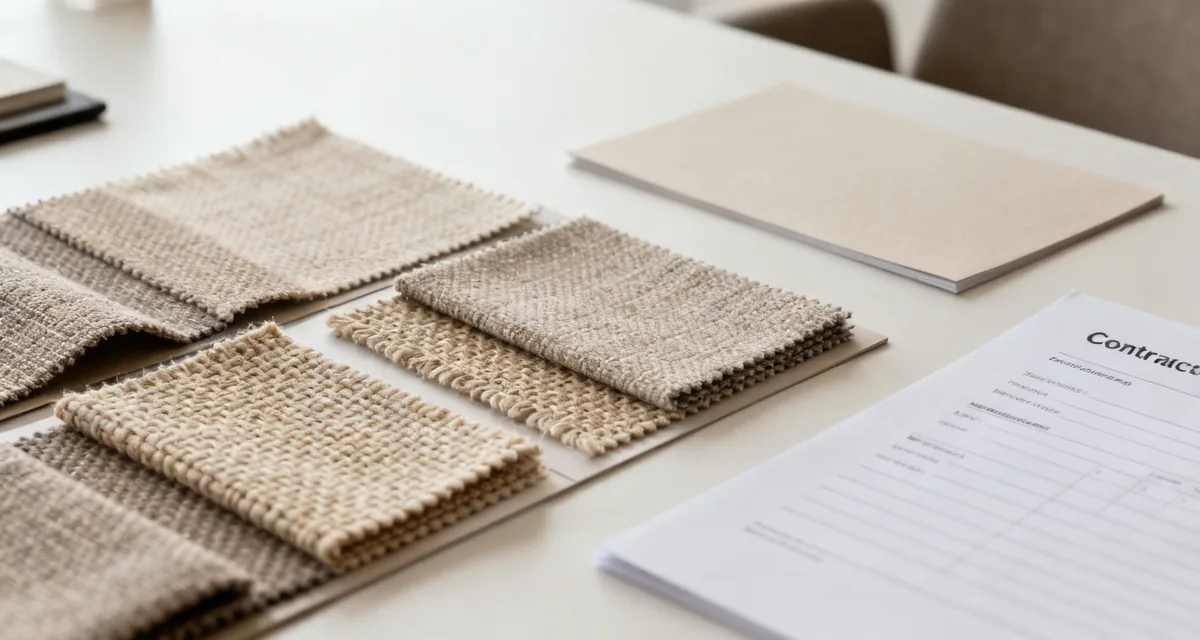
Add a Camira material name or dated swatch reference when you have one. Record known fiber composition, GSM in g/m², usable width in cm and finish. Mark targets as targets and leave unknown values open. If colour is central, describe the lab dip or shade band reference and viewing conditions. Screen colour is a direction for discussion, not an approved physical standard. A retained sample also needs its own link to a proposed batch before it can support bulk approval.
Explain the next decision
Tell us what you need to compare.
Include fiber composition, weave construction, usable width, dimensional stability and batch traceability when those records are relevant and known. Explain what the next response needs to clarify. For example, a material comparison may need separate evidence for abrasion resistance, pilling and seam slippage. Include the relevant method and sample condition if you already hold a report. Do not substitute one result for another or treat an unverified certificate as product approval. Supply quantity, destination and the order stage so that stock and custom questions can be considered separately; no availability, minimum quantity or delivery date is assumed here.
Use the form to bring the material and the interior setting into one discussion. Identify the textile reference, intended upholstery use and the question you need to resolve. If appearance is the priority, include the shade reference and describe the light or viewing context used for comparison. For a performance question, attach the relevant method and specimen state rather than a number alone. Share a business email for correspondence and keep a copy of the reference being discussed. Quantity, sampling and timing can then be considered alongside the material requirements.